
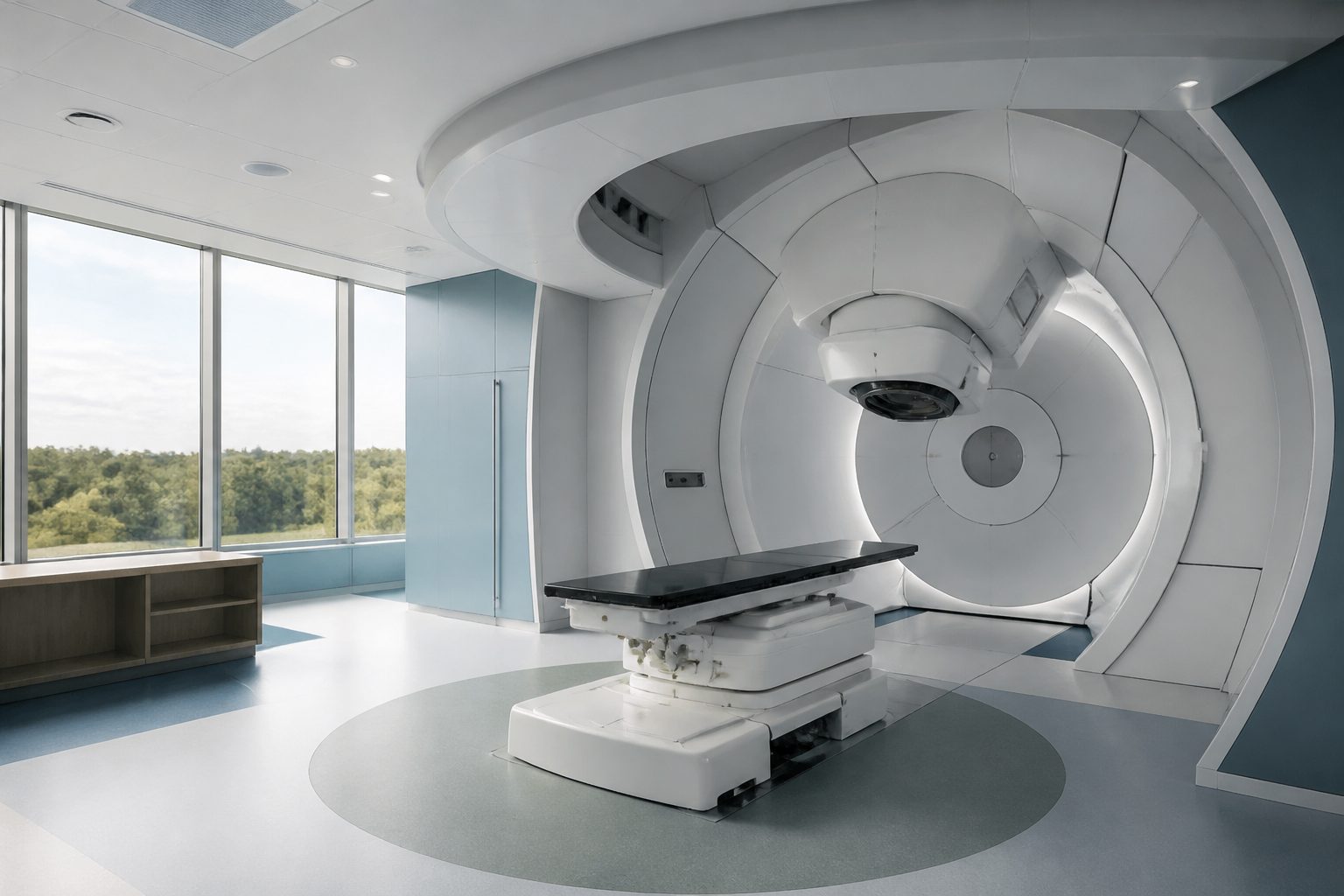
Proton therapy is a highly advanced form of radiation treatment for cancer, offering precision that can spare healthy tissues. For patients and families considering this option, costs are a major concern—proton therapy is significantly more expensive than standard radiotherapy, with prices ranging from $30,000 to over $120,000 depending on the country and centre.
This guide is for those evaluating proton therapy for cancer, especially when weighing international options. We compare prices, explain what’s included, highlight leading centres, and outline important cost drivers and planning tips.
What is proton therapy and who needs it?
Proton therapy is an advanced form of radiation treatment that uses beams of charged particles (protons) instead of conventional X-rays to destroy cancer cells. The key advantage of proton therapy is its ability to deliver high doses of radiation directly to the tumour with remarkable precision, minimizing damage to surrounding healthy tissues and critical organs. This makes it especially valuable for treating cancers in sensitive or hard-to-reach areas.
Proton therapy is most often recommended for cancers where tissue preservation is crucial. Common indications include:
- Paediatric cancers: Children are particularly vulnerable to the long-term side effects of conventional radiation, especially to the brain, spine, and vital organs. Proton therapy reduces the risk of developmental delays and secondary cancers, so many countries, including the US, UK, and Japan, prioritize access for paediatric cases.
- Brain and spinal tumours: Tumours located near critical structures, such as the optic nerves or brainstem, benefit from the precision of protons, lowering the risk of vision loss, cognitive impairment, or paralysis.
- Eye tumours: Conditions like ocular melanoma are often treated with proton therapy to maximize tumour control while preserving vision.
- Head and neck cancers: These cancers are close to vital organs and nerves, where proton therapy’s accuracy can minimize side effects like swallowing difficulties or speech problems.
- Re-irradiation cases: Patients who have already received conventional radiotherapy and cannot tolerate more X-rays may be eligible for proton therapy as a safer alternative.
However, proton therapy is not suitable for all cancer patients. Its high cost and limited availability mean it is generally reserved for cases where the benefits are clear and substantial. A multidisciplinary team—usually including radiation oncologists, surgeons, and medical physicists—reviews each case to determine if proton therapy is justified based on tumour type, location, patient age, and previous treatments. In some countries, such as the UK and Canada, strict eligibility criteria are applied due to limited public funding. Patients are encouraged to seek a second opinion or referral from a cancer centre experienced in proton therapy to confirm their suitability.
Global cost comparison: Proton therapy by country
Proton therapy centres are located in a limited number of countries, mostly in the US, Europe, Japan, Korea, China, Singapore, and the Middle East. Costs vary widely, reflecting differences in healthcare systems, technology investment, and whether treatment is subsidised by government or insurance. The table below compares typical total costs for a full course (including planning, treatment, and follow-up) across major destinations.
| Country | Typical cost (USD) | Local currency | Notes |
|---|---|---|---|
| USA | $70,000–$120,000 | USD | Highest costs; insurance may cover part/all |
| UK | $50,000–$100,000 (£40,000–£80,000) | GBP | Limited private access; NHS covers for some |
| Germany | $55,000–$95,000 (€50,000–€86,000) | EUR | Leading centres; private/self-pay only |
| Japan | $30,000–$60,000 (¥4–8 million) | JPY | Lower prices; some insurance coverage |
| South Korea | $35,000–$60,000 (₩46–80 million) | KRW | Modern centres; English-speaking services |
| China | $30,000–$55,000 (¥210,000–390,000) | CNY | Rapidly expanding capacity; variable wait |
| Singapore | $45,000–$80,000 (S$60,000–110,000) | SGD | New centre; high international standards |
| India | $35,000–$60,000 (₹29–50 lakh) | INR | Single centre; long waiting lists |
| United Arab Emirates | $45,000–$80,000 (AED 165,000–295,000) | AED | Modern, JCI-accredited centre |
| Turkey | $40,000–$70,000 (₺1.3–2.3 million) | TRY | New centre; international patient support |
What is included in proton therapy costs?
When you receive a quote for proton therapy, it’s important to understand exactly what is and isn’t included in the price. Proton therapy packages vary by country, centre, and even by individual case, but most reputable facilities include several core components in their standard fee. Knowing these details will help you avoid unexpected expenses and allow for more accurate budgeting.
- Initial specialist consultation and eligibility assessment: This typically includes meetings with radiation oncologists and, if needed, a multidisciplinary team to determine if proton therapy is appropriate for your diagnosis. Some centres offer this as part of the treatment package, while others may charge separately, especially for international patients.
- Advanced imaging for planning: Detailed imaging such as MRI, CT, and PET scans are essential for mapping the tumour and planning precise treatment. In countries like the US and Germany, these scans can be expensive if billed separately, so confirm they are included in your quote.
- Custom immobilisation devices: Special moulds or masks are created to keep you perfectly still during treatment, ensuring accuracy and safety. This process is standard in most modern centres worldwide.
- Treatment planning and simulation: A team of physicists and dosimetrists uses your imaging data to design a personalized treatment plan. Simulation sessions, where you rehearse the process, are also typically included.
- Full course of proton therapy sessions: The quoted price usually covers all treatment fractions (often 20–30 sessions), but the exact number can vary by cancer type and protocol. Ask your centre to specify the number of sessions included.
- Routine monitoring and follow-up: Blood tests, weekly check-ups, and at least one post-treatment follow-up visit are generally included. Some centres provide more extensive follow-up care, while others may charge extra for long-term monitoring.
Common exclusions
- Other therapies: Surgery, chemotherapy, or additional radiotherapy are usually not included unless you are in a comprehensive cancer care package. These can add significant costs.
- Hospital admission: If you require inpatient care due to complications, this is often billed separately and can be particularly expensive in countries like the US or Switzerland.
- Travel, visa, and accommodation: For international patients, these logistical expenses are almost always excluded from the medical quote and must be planned for independently.
- Extended follow-up care: Long-term monitoring or rehabilitation services after the initial post-treatment period may incur additional charges, depending on the centre.
Always request a comprehensive, itemized cost breakdown in writing before starting treatment. This will help you compare options and avoid unpleasant surprises later.
Leading proton therapy centres worldwide
Not all cancer hospitals offer proton therapy. The technology is available only at a select group of centres with the right infrastructure and expertise. Some of the most established and internationally recognised centres include:
- MD Anderson Cancer Center, Houston, USA
- Massachusetts General Hospital, Boston, USA
- The Christie NHS Foundation Trust, Manchester, UK
- Heidelberg Ion-Beam Therapy Center (HIT), Germany
- Proton Therapy Center, Prague, Czech Republic
- National Cancer Center Hospital East, Japan
- Samsung Medical Center, Seoul, South Korea
- Apollo Proton Cancer Centre, Chennai, India
- National Cancer Centre Singapore
- Burjeel Medical City, Abu Dhabi, UAE
Each centre has its own referral requirements, waiting times, and experience treating different tumour types. Some focus more on paediatric or rare cancers, while others have broader adult programmes. International patients should check language support, visa help, and remote consultation options.
Factors that drive the cost of proton therapy
The high cost of proton therapy is shaped by several complex and interrelated factors, making it one of the most expensive cancer treatment options globally. Understanding these drivers can help patients and families anticipate expenses and make informed decisions about care.
- Equipment and facility investment: Proton therapy centres require a massive initial outlay for specialized equipment, most notably the particle accelerator (cyclotron or synchrotron) and extensive radiation shielding. Construction and setup costs often exceed $100–$200 million USD, depending on the country and size of the facility. For example, in the United States and Western Europe, higher labour and regulatory costs further increase these figures, while some Asian countries have managed to reduce costs through technological innovations and government subsidies.
- Treatment complexity: Each proton therapy plan is highly individualized. Advanced imaging (such as 4D CT scans and MRI), complex physics calculations, and rigorous quality assurance protocols are required to ensure precise targeting. This level of customization demands more time and resources than conventional radiotherapy, increasing personnel and operational costs.
- Team expertise: Proton therapy centres employ multidisciplinary teams of highly trained radiation oncologists, medical physicists, dosimetrists, radiographers, and specialized nursing staff. Salaries and ongoing training for these professionals are significant cost drivers, especially in countries with higher wage standards like the US, UK, and Germany.
- Course length: The number of treatment sessions (fractions) varies by cancer type, tumour location, and patient age. For example, paediatric brain tumours might require 30–35 sessions, while some adult cancers need fewer. Longer courses mean higher cumulative costs for facility use, staff time, and consumables.
- Country-specific factors: The structure of healthcare funding plays a major role. In countries with public healthcare (like the UK or Canada), costs may be partially or fully covered for eligible cases, but access is limited. In the US, private insurance coverage varies and out-of-pocket costs can be substantial. Local pricing for medical equipment, utilities, and regulatory compliance also influence the final bill.
- Additional services: Some proton centres offer comprehensive support, such as psychological counselling, nutritional advice, or long-term follow-up, bundled into their fees. Others charge separately for these services. Centres serving many international patients may also include translation or concierge services, which can add to the cost.
All these factors combine to make proton therapy a premium, resource-intensive treatment. Patients should always request a detailed cost breakdown and ask how these factors apply in their chosen country or centre.
How to choose a proton therapy centre
Choosing the right centre involves balancing expertise, technology, access, and cost. Consider the following:
- Experience with your cancer type: Ask how many similar cases the centre has treated and their outcomes.
- Accreditations: Look for international quality accreditations (such as JCI) or national equivalents.
- Multidisciplinary support: Ensure the centre offers full oncology services, including surgery and chemotherapy if needed.
- International patient services: Check for English-speaking coordinators and help with travel, accommodation, and visas.
- Transparent pricing: Insist on a detailed written quote and ask about extras or possible complications.
- Waiting times: Some centres have significant queues, especially for subsidised or paediatric cases.
Remote second opinions can help you decide before committing to travel. Many centres now offer video consultations and will review your case notes and imaging in advance.
Hidden and extra costs to plan for
When considering proton therapy, it’s essential to look beyond the headline price of the treatment itself. Many patients and families are surprised by a range of hidden and additional expenses that can significantly increase the total cost of care. Proton therapy is rarely a stand-alone solution; it is often part of a broader cancer treatment plan that may include other therapies and support services.
- Pre-treatment diagnostics: Before starting proton therapy, patients typically undergo extensive diagnostic procedures. These may include biopsies, advanced imaging such as MRI, CT, or PET scans, and blood work. In countries like the United States or the UK, these diagnostic procedures can cost several thousand dollars or pounds, especially if not fully covered by insurance or the national health system.
- Additional therapies: Many patients require a combination of treatments. Chemotherapy, surgery, or immunotherapy may be needed before, during, or after proton therapy. The costs for these can vary dramatically by country and centre. For example, in Germany and Japan, bundled cancer care packages sometimes include these, but often they are billed separately.
- Travel and accommodation: Proton therapy centres are concentrated in major cities or specific countries, meaning many patients must travel far from home. Treatment courses usually last 4–8 weeks, so accommodation expenses can add up quickly. For example, a patient traveling from India to the Czech Republic or from rural Canada to a U.S. centre may face thousands of dollars in airfare, hotel stays, local transportation, and daily living expenses. Bringing a companion, which is often necessary for young or frail patients, doubles some of these costs.
- Translation, visa, and insurance: International patients must budget for translation of medical records, interpreter services during consultations, and the cost and processing time for medical visas. Insurance for overseas medical care is essential to protect against unexpected costs, and premiums can be substantial, especially for older patients or those with complex medical needs.
- Unexpected medical complications: While rare, complications such as infections, severe side effects, or other medical emergencies can arise, requiring hospital admission or additional interventions. These costs are often not included in the original estimate and can be particularly high in countries like the U.S., where hospital stays are expensive.
To help offset these expenses, some charities, non-profit organizations, and government agencies offer financial support, especially for children and young adults. For instance, in the UK, the NHS sometimes funds overseas proton therapy for children, and in Japan, certain foundations provide grants. It’s crucial to check with your local cancer society, embassy, or hospital social worker to explore available financial aid, travel grants, or subsidy programs specific to your country and situation.
How to save safely on proton therapy
While the cost of proton therapy can be daunting, there are practical strategies to manage expenses without compromising the safety or quality of your treatment. It’s crucial to prioritize experienced centres and proven technology over simply seeking the lowest price, but careful planning can yield significant savings.
- Explore clinical trials and charity support: Many countries, such as the United States, Germany, and Japan, have ongoing clinical trials that offer proton therapy at reduced or no cost to eligible patients. Charities and government programs may also provide grants or subsidies, particularly for children and rare cancer types. Start by asking your oncologist or local cancer society about available programs.
- Consider international centres: Proton therapy costs vary widely by country. For example, Japan, South Korea, and the Czech Republic have built efficient, high-volume centres that often offer lower prices than those in the US or Western Europe, while maintaining strong international reputations. However, always verify the centre’s accreditation, treatment outcomes, and experience with your specific cancer type before committing.
- Negotiate payment terms: Many hospitals are willing to discuss payment plans, staged payments, or even discounts for upfront payment or self-pay patients. Don’t hesitate to ask for a written quote and clarify payment schedules. Some centres, especially in Asia and Eastern Europe, are more flexible than those in North America or Western Europe.
- Leverage remote consultations: Use telemedicine for initial consultations, follow-up visits, and second opinions. This reduces the need for multiple trips abroad and can save thousands on travel and accommodation. Many leading centres now offer comprehensive remote services for international patients.
- Check insurance and reimbursement options: Contact your health insurer or national health authority to see if they will cover part of the treatment cost, either domestically or abroad. Some European countries have cross-border healthcare agreements, and certain US insurers may reimburse overseas care if it meets specific criteria. Always obtain pre-authorization in writing.
Above all, do not select a centre based solely on price. Ensure the facility has a strong track record, up-to-date technology, and robust support for international patients. Ask for references, published outcome data, and details about aftercare. A well-informed choice can balance cost savings with the best possible treatment outcome.
Frequently asked questions
How long does a course of proton therapy usually take?
Most proton therapy courses last 4 to 8 weeks, with daily sessions (Monday to Friday). Each session takes about 30 to 60 minutes, but the treatment itself is only a few minutes. The rest of the time is spent on set-up and imaging to ensure accuracy.
Is proton therapy covered by insurance?
Insurance coverage for proton therapy depends on the country, insurer, and specific cancer diagnosis. In the US and some European countries, insurers may cover proton therapy for certain indications (such as paediatric or brain tumours), but often require pre-approval. In Asia, coverage is less common, and most patients pay out of pocket or seek government support.
What cancers are most commonly treated with proton therapy?
Proton therapy is most often used for paediatric cancers, brain tumours, eye tumours, head and neck cancers, and spinal tumours. It may also be used for prostate, lung, and some gastrointestinal cancers when tissue-sparing is critical or in re-irradiation cases.
Are there waiting lists for proton therapy?
Waiting times vary widely. In countries with public funding or few centres (such as the UK or India), there may be waiting lists of several weeks to months, especially for paediatric or rare tumours. In the US, Japan, and some private centres, waiting times are generally shorter, but availability can fluctuate.
Can international patients access proton therapy abroad?
Yes, many proton centres have dedicated international patient departments offering help with medical records, visas, travel, and accommodation. Advance planning is recommended, as pre-approval and consultation are usually required before scheduling treatment.
Related guides
Disclaimer: Prices in this guide are indicative and may vary by case, hospital, and exchange rates. Always request a detailed written quote and consult a qualified oncology specialist before making any treatment decisions.