
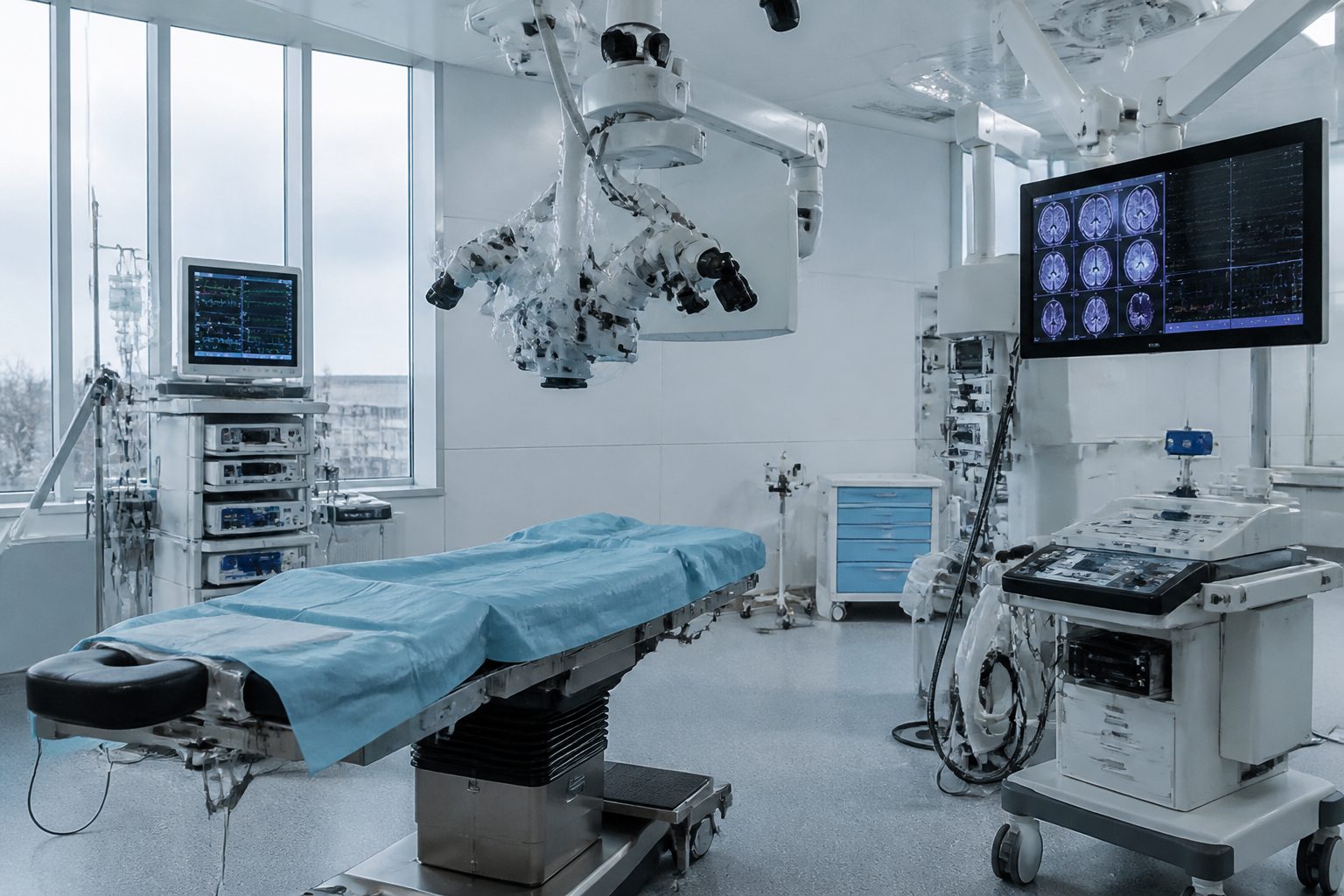
Epilepsy surgery is a major decision for patients with uncontrolled seizures, requiring careful consideration of both cost and care quality. For those comparing options in India, Singapore, and Germany, the bottom line is that prices and what you get for them can vary widely between these countries.
In India, total costs for epilepsy surgery typically range from $6,000 to $12,000 (₹5–10 lakh). In Singapore, the range is $25,000 to $45,000 (S$34,000–62,000), while Germany’s costs are typically between $28,000 and $50,000 (€25,000–45,000). Here’s how these costs break down, what’s included, and what to expect at leading centres.
What is epilepsy surgery and who is it for?
Epilepsy surgery is a specialised neurosurgical intervention designed to treat patients whose seizures cannot be controlled by medication—a condition known as medically refractory or drug-resistant epilepsy. The primary goal of surgery is to either remove or disconnect the area of the brain responsible for generating seizures, thereby reducing or eliminating seizure activity. There are several main types of epilepsy surgery. The most common is resective surgery, which involves removing the seizure focus, often located in the temporal lobe (temporal lobectomy). Other types include disconnection procedures, such as corpus callosotomy, which interrupts the spread of seizures between brain hemispheres, and neuromodulation therapies, like the implantation of vagal nerve stimulators or responsive neurostimulation devices, which modulate abnormal brain activity without removing brain tissue.
Determining candidacy for epilepsy surgery is a meticulous process. It begins with a comprehensive pre-surgical evaluation conducted by a specialised epilepsy team, usually involving prolonged video EEG monitoring to precisely localise seizure onset, high-resolution MRI to identify structural abnormalities, and sometimes invasive monitoring with electrodes placed directly on the brain surface. Neuropsychological assessment and functional imaging (such as PET or SPECT) may also be used to evaluate memory, language, and other cognitive functions, as well as to map critical brain areas that must be preserved.
Surgery is typically reserved for adults and children who experience frequent, disabling seizures that significantly impact daily life, education, employment, or personal safety. The risks and benefits must be carefully weighed, and surgery is only considered if the likelihood of substantial seizure reduction or freedom outweighs the potential complications, such as memory or language deficits. Not every patient with epilepsy is a candidate; factors like seizure type, location, underlying brain pathology, and overall health play a critical role. Ultimately, a comprehensive assessment and shared decision-making process with a specialist epilepsy team are essential to determine suitability and optimise outcomes.
Epilepsy surgery cost comparison: India, Singapore and Germany
Below is a comparison of typical price ranges for epilepsy surgery in these three countries. Costs vary by hospital, patient complexity, and the type of surgery required. The table includes the most common resective procedures (such as anterior temporal lobectomy), which are the standard option for many patients.
| Country | Typical cost (USD) | Local currency | Includes | Not included |
|---|---|---|---|---|
| India | $6,000–$12,000 | ₹5–10 lakh | Pre-surgical workup, surgery, anaesthesia, 7–12 days hospital stay, routine post-op care, standard medications | Advanced imaging, extra ICU days, unforeseen complications, travel, accommodation |
| Singapore | $25,000–$45,000 | S$34,000–62,000 | Full assessment, surgery, 10–14 days hospital stay, anaesthesia, post-op monitoring, basic medications | Pre-arrival tests, additional ICU, complications, travel, extended stay |
| Germany | $28,000–$50,000 | €25,000–45,000 | Comprehensive evaluation, surgery, 12–18 days hospital stay, anaesthesia, rehab consults | Visa, travel, extra diagnostics, extended rehab, translation services |
What is included in the price?
The quoted price for epilepsy surgery almost always covers a core package of medical services, but the exact inclusions can differ between countries and hospitals. Typically, the base price will encompass the pre-operative assessment, the surgical procedure itself, anaesthesia, a standard hospital stay (usually ranging from 7 to 18 days), and routine post-operative medications. The pre-operative workup is a critical component and generally consists of video EEG monitoring to localise seizure activity, high-resolution MRI scans, neuropsychological evaluation, and comprehensive blood tests to assess overall health and surgical risk.
In Singapore and Germany, the pre-surgical package may also include more advanced imaging modalities, such as PET or SPECT scans, and more extensive neuropsychological testing. These additional assessments are often necessary for complex cases or when the seizure focus is difficult to identify, and they contribute to the higher overall cost in these countries. Some centres may also bundle in intraoperative monitoring (such as electrocorticography) and a limited period of intensive care if required immediately after surgery.
However, there are several important exclusions to be aware of. Costs for unforeseen complications—such as post-operative infections, bleeding, or neurological deficits—are rarely included and can lead to extended ICU or hospital stays, significantly increasing the final bill. Additional imaging, complex pre-operative investigations (like invasive EEG monitoring), and specialist consultations may also be charged separately. Non-medical expenses such as international travel, local accommodation for you and your family, daily living costs, and follow-up care after discharge (including teleconsultations or in-person reviews) are almost always excluded from the base price. In Germany, services like translation of medical documents and visa support for non-EU patients may incur extra charges.
To avoid unexpected expenses, always request a detailed, itemised breakdown from your chosen hospital before making a commitment. Ask specifically about the cost of each component, potential extras, and the process for handling complications or additional treatments. This transparency will help you budget accurately and prevent financial surprises during your treatment journey.
Top epilepsy surgery centres in India, Singapore and Germany
High-quality epilepsy surgery is performed at a select group of specialised hospitals that combine experienced neurology and neurosurgery teams with advanced diagnostic and monitoring technologies. In India, leading centres include the National Institute of Mental Health and Neurosciences (NIMHANS) in Bangalore, which is a government-funded institute known for research and high surgical volumes; Apollo Hospitals, with branches in Chennai, Delhi, and Hyderabad, offering comprehensive epilepsy programs; and Fortis Hospitals in Delhi NCR, Bangalore, and Mumbai, which are recognised for their multidisciplinary approach and international patient services. These hospitals are equipped with state-of-the-art neuroimaging, video EEG monitoring, and dedicated epilepsy surgery units.
In Singapore, the National Neuroscience Institute (NNI) is the primary centre for epilepsy surgery. NNI is renowned for its integrated care model, combining neurology, neurosurgery, neuroradiology, and neuropsychology under one roof. The institute caters to both local and international patients, offering advanced imaging, intraoperative monitoring, and a strong focus on long-term follow-up and rehabilitation. International patients benefit from English-speaking staff, established patient coordinators, and assistance with logistics and documentation.
Germany boasts several top-tier university hospitals with global reputations for epilepsy surgery. The University Hospitals of Bonn, Freiburg, and Munich are particularly well known. These centres offer cutting-edge technology, including functional MRI, PET, SPECT, and invasive EEG monitoring, as well as multidisciplinary teams with extensive experience in complex and paediatric cases. German hospitals are also recognised for their rigorous protocols, high safety standards, and comprehensive aftercare programs. For international patients, dedicated coordinators provide support with medical records, translations, visas, and accommodation arrangements.
When selecting a centre, look for those with a dedicated epilepsy surgery program, access to advanced intraoperative monitoring, and established protocols for pre-surgical evaluation and follow-up. Verify the hospital’s track record, ask about surgical volumes and outcomes, and ensure they offer the specific procedure you require. These steps will help you choose a centre that matches your medical needs and logistical preferences.
What drives the price of epilepsy surgery?
The main factors affecting cost are the complexity of the patient’s epilepsy, the type of surgery, length of hospital stay, and the level of technology used. Advanced imaging (MRI, PET, SPECT), invasive monitoring (such as stereo-EEG), and longer stays in ICU will increase the cost. In Singapore and Germany, higher staff costs and mandatory insurance also contribute to higher prices. In India, costs are lower due to lower staff and infrastructure expenses, but high-end technology is available at major centres for an additional charge.
Another key driver is whether the patient needs invasive pre-surgical monitoring (such as subdural grid placement) or a straightforward resection. Neuromodulation (such as vagal nerve stimulation) has a different cost profile, often requiring separate device charges. Patients with other medical conditions may need more extensive pre-op workup, which can add to the total.
How to choose a hospital or surgeon
Choosing the right hospital and surgical team for epilepsy surgery is a crucial step that can directly impact both your clinical outcomes and overall experience. Start by identifying hospitals with a well-established, multidisciplinary epilepsy surgery program. These centres should have a demonstrable track record in the specific procedure you need, whether it’s resective surgery, disconnection procedures, or neuromodulation. Ask about the annual volume of epilepsy surgeries performed, as higher surgical volumes are often associated with better outcomes and lower complication rates.
Investigate the experience and credentials of the neurology and neurosurgery teams. Look for board-certified specialists with fellowship training in epilepsy surgery and experience with cases similar to yours. Availability of advanced neuroimaging (such as high-resolution MRI, PET, or SPECT) and intraoperative monitoring (like electrocorticography) is essential for accurate diagnosis and safe surgery. Accreditation by international bodies such as Joint Commission International (JCI) or relevant national authorities (e.g., NABH in India, ISO in Germany) can indicate robust quality and safety systems, but true expertise lies in the centre’s specialist teams and protocols.
For international patients, practical considerations are also important. Ensure the hospital provides comprehensive language support, transparent and detailed cost breakdowns, and assistance with travel, visas, and accommodation. Ask if there is a dedicated international patient coordinator who can help you navigate logistics and paperwork. Before committing, request a written treatment plan and an itemised quote that includes all anticipated costs—such as pre-operative investigations, surgery, hospital stay, medications, and follow-up. Be sure to clarify what is not included, such as additional imaging, extended ICU stays, or unexpected complications.
If possible, schedule an initial teleconsultation with the surgical team to discuss your case, review your medical records, and ask questions about the centre’s experience and outcomes. This step can provide reassurance, help you assess communication and rapport, and clarify whether the hospital is the right fit for your needs. Taking these practical and clinical steps will help you make a confident, informed choice for your epilepsy surgery abroad.
Hidden costs and how to save safely
Unplanned expenses are common in complex procedures like epilepsy surgery. Potential hidden costs include extra days in ICU or hospital, complications requiring further procedures, additional imaging (PET, SPECT, MEG), and follow-up care after discharge. Translation services, visa extensions, and travel for family members can also add up, especially in Germany and Singapore.
To save safely, clarify exactly what is covered in the quoted price, and budget for at least 15–20% extra for unforeseen needs. Ask about package deals, especially in India, where some hospitals offer fixed-price bundles. Consider using recommended accommodation near the hospital to reduce daily transport costs, and plan for a longer stay if your doctor advises it. Never compromise on the quality of the surgical team or post-operative care to save money.
Planning your trip: visas, accommodation and recovery
Medical visas are usually required for treatment in Singapore and Germany, and may be needed in India depending on your nationality and length of stay. Hospitals often provide visa support letters and can recommend nearby hotels or guesthouses for family members. In Germany and Singapore, costs for accommodation and meals are significantly higher than in India, so budget accordingly.
Patients are usually hospitalised for 7–18 days after epilepsy surgery, followed by a period of rest before travelling home. In most cases, doctors recommend staying in the country for 2–3 weeks after discharge for follow-up and wound care. Arrange for post-operative support, especially if you are travelling alone. Bring all relevant medical records (including imaging on CD or USB) in English or with certified translation.
The bottom line: what to expect and how to decide
Epilepsy surgery represents a significant decision for patients and families dealing with drug-resistant seizures. The procedure can offer a dramatic improvement in quality of life, potentially resulting in seizure freedom or a substantial reduction in seizure frequency. However, it is a complex neurosurgical intervention that involves considerable financial, physical, and emotional investment.
When comparing costs across India, Singapore, and Germany, patients will find that India generally offers the most affordable options. Leading Indian hospitals provide internationally recognised standards, with experienced surgical teams and state-of-the-art facilities, often at a fraction of the cost seen in Western countries. Singapore and Germany, meanwhile, are known for their advanced medical infrastructure, strong regulatory oversight, and high standards of patient care. Both countries cater extensively to international patients, offering streamlined processes, English-speaking staff, and comprehensive support services, but their pricing reflects these premium services.
Choosing the right country and centre depends on several factors. Medical needs should come first: some cases require advanced imaging, rare surgical techniques, or specific expertise that may only be available at certain centres. Budget is a major consideration, as costs can vary widely—not only for the surgery itself but also for related expenses such as travel, accommodation, and the potential need for extended post-operative recovery abroad. Additionally, patients should factor in the logistics and costs of long-term follow-up, which may require return visits.
To make an informed decision, always consult a qualified epilepsy specialist and request a written quote that details exactly what is included in the price. Ask about the breakdown of costs, possible additional charges, and the expected duration of hospital stay and recovery. It is wise to seek a second opinion if you have any doubts or if the recommendations differ. Finally, consider your ability to travel, your support system, and your comfort with the healthcare system in your destination country. Thoughtful planning and thorough research can help ensure the best possible outcome for your health and finances.
Frequently asked questions
How long is the hospital stay for epilepsy surgery?
Most patients stay in hospital for 7 to 18 days, depending on the type of surgery, recovery speed, and any complications. A longer stay may be needed if there are unexpected issues or if invasive monitoring is required before surgery. Always check with your treatment centre for their typical length of stay for your specific procedure.
Can all types of epilepsy be treated with surgery?
No, epilepsy surgery is only suitable for certain patients, usually those with a well-localised seizure focus and seizures that do not respond to medication. Some types of epilepsy, such as generalised epilepsy, are usually not treated surgically. A full assessment by an experienced epilepsy team is essential to determine eligibility.
What are the risks and complications of epilepsy surgery?
Risks include infection, bleeding, stroke, neurological deficits (such as memory or speech problems), and continued seizures. The specific risks depend on the brain area operated on and the patient’s health. Most complications are rare in experienced centres, but all surgery carries some risk. Discuss these thoroughly with your surgical team.
Will I need to stay in the country after surgery for follow-up?
Yes, it is recommended to stay in the country for 2–3 weeks after discharge for follow-up visits, wound care, and initial recovery. Your doctor will advise when it is safe to travel. Some follow-up can be done by telemedicine, but initial post-surgical monitoring should be done in person at the hospital where the surgery was performed.
Can I get a fixed-price package for epilepsy surgery?
Some hospitals, especially in India, offer fixed-price packages covering pre-op tests, surgery, hospital stay, and routine post-op care. However, these usually do not include costs for complications, extra ICU days, or advanced imaging. Always ask for a detailed written quote and clarify what is and is not included before agreeing to any package.
Related guides
Disclaimer: Prices and details are indicative and can vary by case, hospital, and exchange rates. Always obtain a written quote and consult a qualified medical professional before making any decisions about epilepsy surgery abroad.