
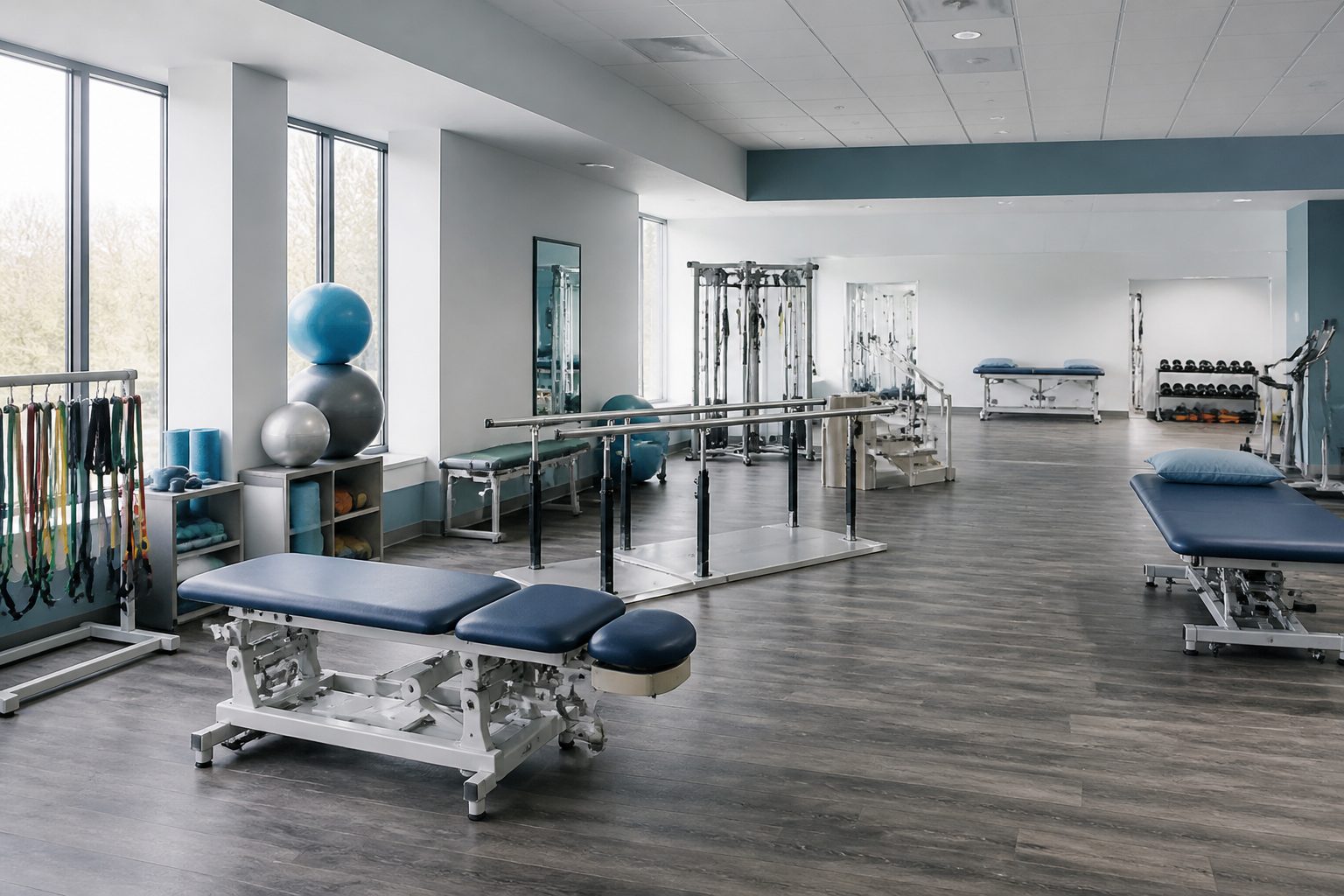
Stroke rehabilitation in the UK and USA involves intensive, often long-term therapy in specialised centres. Costs vary widely: expect anywhere from $5,000 for basic outpatient care to over $50,000 for comprehensive, inpatient programmes.
This guide explains what’s included in stroke rehab pricing, where the best centres are, and what international and uninsured patients should prepare for in terms of costs and care planning.
What is stroke rehabilitation?
Stroke rehabilitation is a comprehensive, multidisciplinary process designed to help individuals regain as much function and independence as possible following a stroke. The primary goal is to enable patients to relearn skills lost when part of the brain is damaged, and to adapt to any ongoing limitations. Rehabilitation typically begins as soon as the patient is medically stable, often within 24-48 hours after the stroke, and can continue for months or even years, depending on the severity of impairment and patient progress.
The rehabilitation process commonly involves several core therapies:
- Physical therapy: Focuses on improving strength, balance, coordination, and mobility. Therapists may use exercises, gait training, and assistive devices to help patients relearn how to walk or move affected limbs.
- Occupational therapy: Helps patients regain the ability to perform daily activities such as dressing, bathing, cooking, and managing finances. Therapists may suggest adaptive equipment or modify the home environment to enhance safety and independence.
- Speech and language therapy: Aims to restore communication skills and address swallowing difficulties (dysphagia). Therapists use exercises, alternative communication methods, and cognitive-linguistic interventions.
- Psychological and emotional support: Stroke survivors often experience depression, anxiety, or cognitive changes. Psychologists and counsellors provide coping strategies, mental health support, and family education.
Rehabilitation can be delivered in various settings, including acute hospitals, specialised inpatient rehabilitation centres, outpatient clinics, community health centres, or even at home. The choice of setting and intensity—ranging from daily intensive therapy to weekly sessions—depends on the individual’s medical needs, the severity of the stroke, insurance coverage (especially in the USA), and personal recovery goals. In the UK, the National Health Service (NHS) coordinates most rehabilitation services, while in the USA, access and extent of services are heavily influenced by insurance plans and ability to pay. Engaging in early and sustained rehabilitation is crucial for maximising recovery and improving quality of life after a stroke.
Stroke rehabilitation options in the UK and USA
Both the UK and USA provide a spectrum of stroke rehabilitation options to accommodate diverse patient needs, healthcare systems, and financial circumstances. The availability, quality, and cost of these services can vary significantly between and within these countries.
United Kingdom
In the UK, the majority of stroke rehabilitation is delivered through the publicly funded National Health Service (NHS). Patients typically begin their rehabilitation journey in an NHS hospital, where they may receive acute inpatient rehab immediately after a stroke. For more complex needs, regional specialist stroke centres offer intensive, multidisciplinary care. Once patients are medically stable, they may be transferred to community hospitals, outpatient clinics, or receive therapy at home through community rehabilitation teams. The NHS covers most core rehabilitation costs for UK residents, but waiting times and service intensity can vary by region. For those seeking faster access, more intensive therapy, or advanced technologies, private rehabilitation facilities are available. These cater to self-paying patients, those with private insurance, or international patients, and often offer bespoke programmes and amenities.
United States
In the USA, stroke rehabilitation is delivered across a range of settings, including:
- Acute inpatient rehabilitation hospitals: Provide intensive, round-the-clock therapy and medical care, typically for patients with moderate to severe deficits.
- Skilled nursing facilities: Offer less intensive rehabilitation for patients who still require medical oversight but cannot tolerate full inpatient therapy.
- Outpatient clinics: Suitable for patients who are medically stable and can travel to therapy sessions several times a week.
- Home-based rehabilitation: Therapists visit the patient’s home to provide tailored therapy, often after discharge from hospital or for those unable to travel.
The choice of setting in the USA is influenced by the patient’s clinical needs, insurance coverage (Medicare, Medicaid, private insurance), and out-of-pocket financial capacity. Some patients may transition between settings as they progress. Unlike the UK, where the NHS covers most costs, in the USA patients may face significant co-pays, deductibles, or full out-of-pocket payment if uninsured or underinsured. Private rehabilitation centres in both countries often offer more personalised care, shorter waiting times, and access to advanced rehabilitation technologies, but at a higher cost.
Practical steps for patients and families include consulting with hospital discharge planners, understanding insurance benefits, comparing facility reputations, and requesting detailed cost estimates before starting rehabilitation. Early planning and advocacy are key to securing the most appropriate and affordable rehabilitation pathway in either country.
Cost breakdown: inpatient vs outpatient stroke rehab
Costs differ significantly between inpatient and outpatient stroke rehabilitation.
- Inpatient rehabilitation: Patients stay in a hospital or rehab centre, receiving 24/7 care and intensive therapy. This is the most expensive option, but offers the highest level of support.
- Outpatient rehabilitation: Patients live at home and attend scheduled therapy sessions. Costs are lower, but sessions may be less frequent and less intensive.
Inpatient rehab typically lasts from 2 to 12 weeks, while outpatient programmes can continue for months. The table below summarises typical costs in both countries.
| Country | Inpatient rehab (2-4 weeks) | Outpatient rehab (per session) | Annual cost (private/self-pay) |
|---|---|---|---|
| UK | $7,500-$20,000 (£6,000-£16,000) | $100-$250 (£80-£200) | $15,000-$40,000 (£12,000-£32,000) |
| USA | $20,000-$50,000 | $150-$400 | $30,000-$70,000 |
What is included in stroke rehab costs?
The cost of stroke rehabilitation can encompass a wide array of services, and understanding exactly what is included is crucial for patients and families planning their recovery journey. In both the UK and USA, a standard stroke rehab package typically covers the core elements necessary for effective recovery, but the specifics can vary by facility, funding source, and individual needs.
- Inpatient rehabilitation: Usually includes accommodation in a hospital or rehabilitation centre, daily therapy sessions (physical, occupational, and speech therapy), 24-hour nursing care, regular medical supervision by rehabilitation physicians, and meals. Some programmes also provide access to social workers, case managers, and discharge planning services. In private facilities, additional amenities such as private rooms, concierge services, or wellness programmes may be included, especially for self-pay or international patients.
- Outpatient rehabilitation: Covers initial assessments, a set number of therapy sessions (often scheduled weekly or bi-weekly), and periodic reviews with specialist doctors to monitor progress and adjust treatment plans. Outpatient settings may also include access to group therapy sessions, caregiver training, and educational workshops.
- Additional services: Advanced technology such as robotic-assisted therapy, virtual reality, hydrotherapy, or computer-based cognitive training may be available, but often come with extra charges. Neuropsychology consultations, vocational therapy, and social work support may be included in comprehensive packages or billed separately.
In the UK, NHS-funded rehabilitation generally covers all core services for eligible patients, but private facilities may charge for extras not included in standard packages. In the USA, insurance plans (Medicare, Medicaid, private insurance) may cover some or all of the above, but patients are often responsible for co-pays, deductibles, or services deemed non-essential by their insurer.
To avoid unexpected expenses, it is vital to request a detailed written breakdown of all anticipated costs before starting rehabilitation. Patients and families should clarify whether medications, diagnostic imaging (MRI, CT scans), assistive devices (wheelchairs, splints, communication aids), and follow-up consultations are included or billed separately. Understanding the billing structure allows for better financial planning and helps prevent disputes or delays in care.
Hidden and extra costs
While the core stroke rehabilitation package covers most essential therapies and services, patients and families should be aware of a range of hidden or additional costs that can accumulate over the course of recovery. These extra expenses can significantly impact the overall financial burden, especially for those paying privately or with limited insurance coverage.
- Initial assessments and diagnostics: Many rehabilitation centres require comprehensive pre-admission assessments, including consultations with specialists and diagnostic imaging (MRI, CT scans, blood tests). These are sometimes not included in the advertised rehab package and can add several hundred to several thousand pounds or dollars to the overall cost.
- Assistive devices and home modifications: Essential aids such as wheelchairs, walkers, orthotic splints, or communication devices are often excluded from standard rehab fees. Additionally, patients may need to invest in home modifications—such as ramps, grab bars, or stairlifts—to ensure safety and accessibility, especially if returning home after inpatient care. In the UK, some local authorities may offer grants or partial funding for home adaptations, but in the USA, these costs are usually out-of-pocket.
- Medications: Ongoing prescriptions for blood thinners, blood pressure medications, or antidepressants are typically billed separately. In the USA, medication costs can be substantial, depending on insurance coverage and formulary restrictions. In the UK, NHS patients may pay standard prescription charges unless exempt.
- Transport: For outpatient rehabilitation, travel expenses can add up quickly, particularly for patients living far from specialist centres. This includes the cost of taxis, adapted vehicles, or public transport. In the UK, some patients may be eligible for hospital travel cost schemes, while in the USA, these costs are generally not reimbursed.
- Carer support and respite care: Additional fees apply if families require training to care for the stroke survivor at home or seek temporary respite care to relieve primary caregivers. These services are often charged by the hour or day and can be a significant ongoing expense.
International patients should also budget for visa fees, accommodation for accompanying relatives, travel insurance, and potentially higher charges for private or expedited services. It is advisable to seek a comprehensive cost estimate from the chosen facility, ask about payment plans or financial assistance programmes, and consult with social workers or patient advocates to explore available support. Being proactive about identifying and planning for hidden costs can help families manage the financial impact of stroke rehabilitation more effectively.
Top stroke rehabilitation centres in the UK and USA
Both the UK and USA are home to several world-renowned stroke rehabilitation centres, each offering unique strengths, advanced therapies, and multidisciplinary expertise for patients with complex needs.
United Kingdom
Within the UK, the National Hospital for Neurology and Neurosurgery (London) is highly regarded for its research-driven approach, experienced multidisciplinary teams, and access to cutting-edge neurorehabilitation techniques. Queen Square Private Healthcare, affiliated with this hospital, provides bespoke rehabilitation programmes for private and international patients, combining medical expertise with hotel-style amenities. Regional NHS specialist stroke units across the country, such as those in Birmingham, Manchester, and Edinburgh, offer high-quality inpatient and outpatient rehabilitation, often with no direct cost to UK residents. For those seeking private care, The Wellington Hospital and Royal Buckinghamshire Hospital are notable for their comprehensive, tailored programmes, advanced robotics, and capacity to manage international cases. These private facilities often have shorter waiting times and more intensive therapy schedules, but costs can be substantial and are usually not covered by the NHS.
United States
In the USA, several major centres consistently rank among the best for stroke rehabilitation. The Shepherd Center in Atlanta is known for its patient-centred approach, advanced technology, and strong outcomes for neurological rehabilitation. The Shirley Ryan AbilityLab in Chicago integrates research, clinical care, and innovation, offering intensive rehabilitation supported by robotics, virtual reality, and specialised therapy teams. Spaulding Rehabilitation Hospital in Boston is recognised for its focus on both inpatient and outpatient care, as well as community reintegration. The Kessler Institute for Rehabilitation in New Jersey stands out for its expertise in complex cases and high patient volumes, which contribute to robust clinical experience and outcome data.
All these centres—both public and private—employ multidisciplinary teams of physicians, therapists, nurses, and psychologists, and are equipped with advanced diagnostic and therapeutic technologies. They cater to both domestic and international patients, often providing support with logistics such as travel arrangements, interpreter services, and accommodation for families. Practical steps for choosing a centre include reviewing published outcome data, arranging virtual or in-person tours, and consulting with referring physicians to match the patient’s needs with the centre’s strengths.
How to choose a stroke rehabilitation centre
When selecting a rehab centre, consider:
- Specialist expertise: Look for centres with dedicated stroke units and access to neurology consultants.
- Therapy intensity: More hours per day typically means faster functional gains.
- Multidisciplinary team: Physical, occupational, and speech therapists, plus access to neuropsychology and social work.
- Facility accreditation: In the USA, CARF accreditation is a positive sign. In the UK, CQC ratings or JCI accreditation are relevant for private hospitals.
- International patient support: Language services, help with visas, and clear billing processes are essential for overseas families.
Ask for outcome data, staff credentials, and patient testimonials where possible. Arrange a virtual or in-person tour before committing.
How to save safely on stroke rehabilitation
Stroke rehab is a major investment, but there are ways to manage costs without compromising quality:
- Compare several centres: Prices and inclusions vary widely, even within the same city.
- Use outpatient care where possible: Transitioning to outpatient therapy after initial inpatient rehab can reduce costs.
- Negotiate package rates: Some private centres offer discounts for longer stays or bundled services.
- Check for funding options: In the UK, some NHS trusts may fund private rehab in special cases. In the USA, check if insurance covers part of rehab, even if you are self-pay for the initial hospital stay.
- Explore tele-rehabilitation: Some follow-up therapies can be delivered remotely at lower cost.
Always prioritise centres with proven clinical expertise and transparent pricing over the lowest sticker price.
Frequently asked questions
How long does stroke rehabilitation usually last?
The duration varies widely, from a few weeks for mild strokes to several months for more severe cases. Most patients benefit from at least 4-12 weeks of structured therapy, but ongoing outpatient or home-based rehab can continue for a year or more as needed.
Is stroke rehabilitation covered by insurance?
In the UK, NHS patients receive rehab free at the point of use, but private/self-pay is common for faster access. In the USA, insurance may cover part of inpatient or outpatient rehab, but coverage limits and co-pays often apply. Uninsured and international patients usually pay out-of-pocket.
What therapies are included in a typical programme?
Most rehab plans include physical therapy, occupational therapy, and speech and language therapy. Neuropsychological support, social work, and nutritional advice may also be provided, depending on the centre and patient needs. Technology-assisted therapies may be available for extra fees.
Can family members stay with patients during inpatient rehab?
Policies vary. Some centres allow relatives to stay on site or nearby, sometimes for an extra fee. Others offer limited visiting hours. Always check accommodation options and family support services before booking, especially if travelling from overseas.
What happens after formal rehabilitation ends?
Many patients continue to improve with ongoing outpatient therapy, community rehab, or home-based exercises. Follow-up appointments with neurology and rehab specialists are common. Some centres offer remote (tele-rehab) support for international or rural patients.
Related guides
Disclaimer: Prices listed are indicative and can vary widely by case, hospital, and location. Always obtain a written quote and consult a qualified medical professional before making any treatment decisions.